
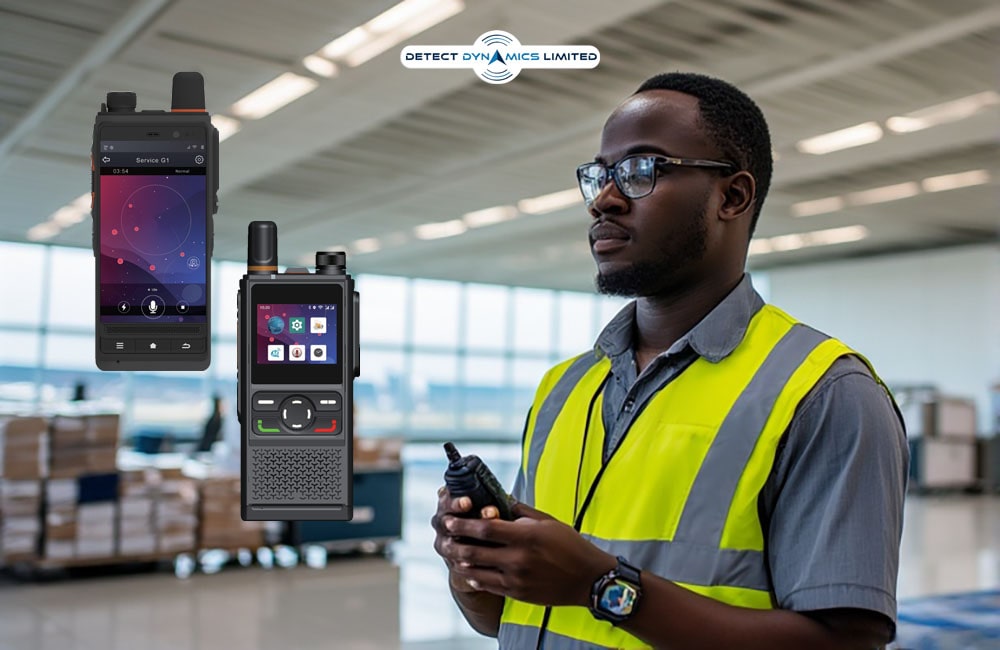
The rhythmic hum of a bustling airport is a symphony of coordinated effort. From the ground crew guiding aircraft to the gate, to the baggage handlers ensuring luggage makes its flight, and the security personnel keeping everyone safe, every role is critical to the airport's seamless operation. The core of this complex dance is communication – instant, reliable, and clear communication. For decades, traditional two-way radios have been the go-to solution, a trusted tool that has served the industry well. But as the demands on airports grow, so too must the tools that support them. The mode airport environment, with its vast scale, intricate logistics, and unyielding pace, requires a communication solution that can keep up.
Enter push-to-talk (PTT) technology, a powerful evolution of the classic two-way radio. PTT has moved beyond its radio-based origins, leveraging mode cellular and Wi-Fi networks to provide a communication experience that is not just faster, but also smarter, more reliable, and packed with features that directly address the unique challenges of the aviation industry. This isn't just about talk – it's about a value-driven transformation that impacts punctuality, safety, and overall operational efficiency. This article will explore how a mode push-to-talk solution, with its advanced features, is the essential upgrade for any airport looking to optimize its services and secure a competitive edge.
The Silent Killer of Efficiency: Noise and Miscommunication
An airport is an inherently noisy environment. Jet engines, ground support equipment, and the constant chatter of thousands of passengers create a cacophony of sound. For ground crews working on the tarmac, this noise isn't just a distraction – it’s a genuine impediment to clear communication. A missed instruction or a misunderstood command can have a domino effect, leading to delays, safety hazards, and costly errors.
This is where the first key benefit of mode PTT solutions comes into play: the crystal-clear speaker. Imagine a ground handler, standing just meters from a running jet engine. They need to hear a precise instruction from a colleague or the control tower. Traditional radios often struggle in these conditions, their audio becoming muffled and distorted by the surrounding noise. Mode PTT devices, however, are engineered to deliver audio with exceptional clarity. The speakers are powerful, designed to cut through the loudest environments, ensuring that every word is heard and understood on the first attempt. This isn't just a matter of convenience – it’s a critical safety measure. By eliminating the ambiguity of a distorted message, these speakers drastically reduce the risk of miscommunication, preventing costly errors and keeping personnel safe. The value here is tangible: fewer delays, a reduction in incidents caused by miscommunication, and a more streamlined, professional operation.
But hearing a message is only half the battle. The ground handler also needs to transmit a response, and their voice must be equally intelligible. This brings us to the second, equally vital feature: noise-cancelling mics. Standard microphones pick up every sound in the vicinity, often transmitting a garbled mess of background noise. The result? The person on the other end of the line receives a message that is difficult, if not impossible, to decipher. Mode PTT devices are equipped with sophisticated noise-cancelling technology that actively filters out ambient sounds. These microphones are intelligent, able to isolate the user's voice from the roar of a jet engine, the beeping of a baggage tractor, or the chatter of a busy concourse. The result is a clean, crisp, and clear transmission every time. This two-way clarity – from the speaker and through the microphone – creates a communication loop that is robust and reliable, even in the most challenging of acoustic environments. For airport operations, where every second counts, and precision is non-negotiable, this is a game-changer. The retu on investment is seen in improved efficiency, reduced tuaround times, and a tangible boost to punctuality – all of which directly impact the airline's bottom line and the passenger experience.
Navigating the Complexities: Location, Safety, and Global Reach
The sheer size of a mode airport presents a logistical puzzle. Terminals can stretch for miles, and the airfield itself is a vast expanse of runways, taxiways, and maintenance areas. Keeping track of personnel and assets across this sprawling landscape is a monumental challenge. Traditional communication systems offer little to no help in this regard. When a problem arises, a supervisor often has to rely on a series of back-and-forth messages just to locate a team member.
Here, the value of GPS tracking is undeniable. Mode PTT devices come with integrated GPS technology, providing real-time location data for every user. This feature tus a simple communication device into a powerful asset management and safety tool. A dispatcher in a central control room can view the location of every team on a digital map, enabling them to make smarter, faster decisions. If a gate requires an urgent maintenance team, the dispatcher can instantly identify the closest available technician and dispatch them with a single click. This eliminates wasted time and ensures that resources are allocated efficiently. Beyond mere efficiency, GPS tracking is a critical safety feature. In the event of an emergency, a "man-down" alert can be automatically triggered, and the exact location of the individual is broadcast to the entire team, enabling a rapid and targeted response. This is a life-saving capability that traditional radios simply cannot provide. The value here is multifaceted, encompassing improved response times, enhanced safety protocols, and a significant reduction in operational friction.
The mode airport is not an island- it is a global nexus. Airlines operate across continents, and their ground crews, flight crews, and support staff are constantly in motion. A communication system limited by a regional or even national network is no longer sufficient. When an aircraft is grounded in a remote location or a team member is on an inteational layover, the need for communication remains.
This is where world-wide network coverage truly shines. Mode PTT solutions leverage the power of cellular networks and Wi-Fi, breaking free from the constraints of traditional radio towers. Whether a pilot needs to communicate with the ground crew from a tarmac in a different country or a maintenance team needs to coordinate with a remote dispatcher, the communication channel remains open and reliable. This global reach ensures that teams are connected regardless of their physical location. It’s a seamless transition from Wi-Fi to cellular networks, guaranteeing continuous connectivity. This is particularly valuable for airlines with dispersed operations, as it eliminates the need for multiple communication systems and provides a single, unified platform for all staff. The result is a more cohesive and responsive global operation, leading to improved coordination, faster issue resolution, and a stronger competitive position in the inteational market. The value is not just in the connectivity, but in the operational fluidity it enables.
Built for the Grind: The Power of Ruggedization
Airport operations are demanding, physically challenging, and often unforgiving. Equipment is subjected to extreme temperatures, constant handling, and the inevitable bumps and drops that come with a fast-paced work environment. A fragile communication device is a liability, one that can fail at the most critical moment.
This is why the ruggedized nature of mode PTT devices is not a luxury, but a necessity. These devices are built to withstand the rigors of the airport environment. They are typically sealed against dust, water, and other contaminants, and their casings are designed to absorb the shock of a fall. The devices are often certified to military-grade standards (e.g., MIL-STD-810G), ensuring they can handle a wide range of environmental stresses, from extreme heat on a sun-scorched tarmac to the cold of a cargo hold. This durability translates directly into a tangible business benefit: a significant reduction in replacement costs and a decrease in equipment downtime. Instead of constantly repairing or replacing broken devices, airport operators can rely on a tool that is built to last. The value is in the longevity and reliability of the equipment, freeing up capital and reducing the logistical headache of device management. This robust construction ensures that the communication lifeline remains intact, even in the toughest of conditions.
Beyond the physical durability, ruggedized PTT devices often feature extended battery life, ensuring that they can last through an entire shift without needing a recharge. This is another critical, value-driven benefit that directly impacts productivity. A device that dies in the middle of a shift is a non-starter. Ruggedized devices are engineered for endurance, providing reliable power for the entire workday, and sometimes even longer.
The End of the Walkie-Talkie Era
The evolution of push-to-talk technology represents more than just a new way to talk – it's a fundamental shift in how airport operations are managed. By moving beyond the limitations of traditional radios and embracing the capabilities of mode cellular networks, PTT solutions have introduced a new paradigm of efficiency, safety, and connectivity. The benefits are clear and quantifiable:
These features are not simply add-ons – they are integrated components of a comprehensive solution designed to meet the specific needs of the airport industry. The move to mode PTT is a strategic investment that pays dividends in improved punctuality, enhanced safety, and a more streamlined, cost-effective operation. The walkie-talkie served its purpose, but the mode airport demands a communication solution that is as advanced, dynamic, and reliable as the industry itself. The time has come to embrace the new standard of communication, to unlock the full potential of a connected and efficient airport, and to secure a brighter, safer, and more productive future for all who work within its walls.
SOURCES
Airports Council Inteational. (2023). Global Airport Traffic Report. ACI World.
IATA. (2024). IATA Annual Review. Inteational Air Transport Association.
Krolak, B. (2022). The future of airport communication: Push-to-talk technology. Airport Technology, 3(4), 45-52.
Smith, J., & Davis, M. (2023). Enhancing operational efficiency with PTT in aviation. Joual of Aviation Management, 15(2), 112-125.
Walker, L. (2021). Push-to-talk systems for ground services. Aviation Business Magazine, 7(1), 18-24.