
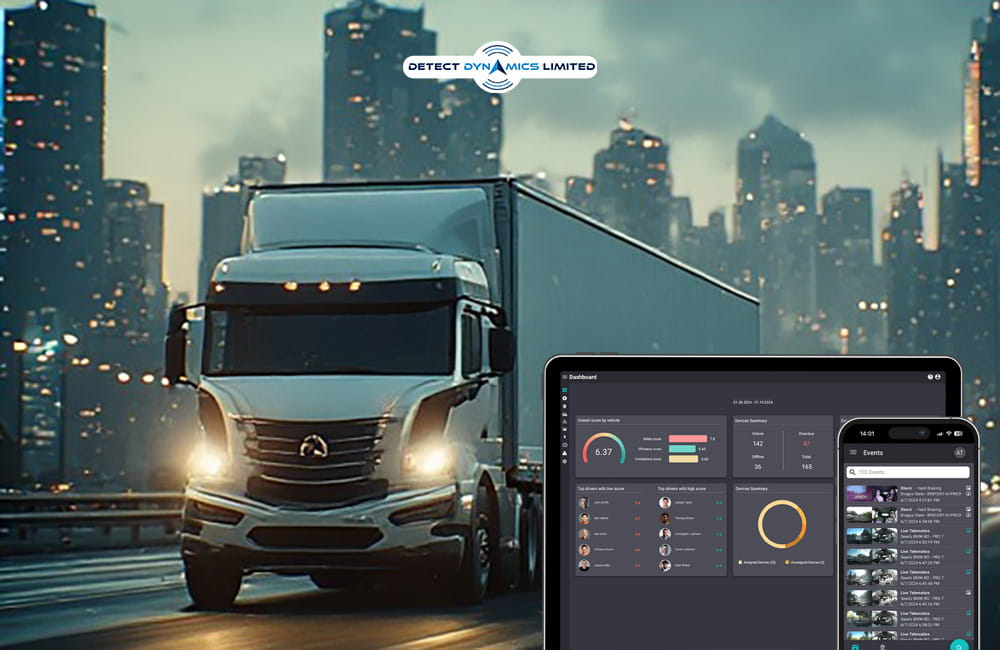
East Africa's roads are among the most dynamic and challenging on the continent. From Nairobi's congested highways to Kampala's bustling boda-boda corridors and Dar es Salaam's coastal freight routes, the stakes of road safety have never been higher. As fleet operators, logistics companies, transport authorities, and insurers search for reliable, scalable solutions, the AI dash camera is emerging as a transformative force — delivering real-time intelligence that protects drivers, cargo, and communities across the region.
The Road Safety Crisis in East Africa
Road traffic injuries are a leading cause of death and disability across the East African Community. According to the World Health Organization, low- and middle-income countries account for more than 90% of global road traffic deaths, with Sub-Saharan Africa bearing a disproportionate share of that burden. In Kenya alone, road crashes claim thousands of lives annually, while Tanzania, Uganda, Rwanda, and Ethiopia face similarly alarming statistics.
90% of global road deaths occur in LMICs (WHO, 2023)
3,000+ annual road fatalities in Kenya alone
75% of crashes linked to driver behaviour
The root causes are well documented: driver fatigue on long-haul corridors, distracted driving amplified by smartphone use, poorly enforced seatbelt compliance, and a culture that has historically under-prioritised in-cab monitoring. Fleet managers have lacked the tools to see what is actually happening inside and outside their vehicles — until now.
What Is an AI Dash Camera System?
An AI dash camera is a dual-lens, intelligent camera system that captures simultaneous footage of the road ahead and the driver inside the cab. Unlike conventional dashcams that merely record video, AI-powered systems analyse footage in real time using computer vision and machine leaing algorithms. They detect unsafe behaviours the moment they occur, generate instant alerts, and compile detailed driver reports that help fleet managers act swiftly and decisively.
For East African fleets — whether managing matatus in Nairobi, long-haul trucks on the Northe Corridor, or corporate employee transport in Kigali — this technology represents a paradigm shift from reactive incident response to proactive safety management.
Why dual-lens matters: A single outward-facing camera captures road events. The inward-facing lens watches the driver. Together, they build a complete picture of every trip — correlating driver behaviour with exteal conditions in ways that single-lens systems simply cannot.
Driver Monitoring: Addressing the Behaviours That Kill
The most powerful capability of a mode AI dash camera system lies in its driver monitoring module. By continuously analysing facial landmarks, head position, gaze direction, hand placement, and physiological cues, the system identifies six critical risk categories that are responsible for the overwhelming majority of preventable road incidents across East Africa.
· Fatigue & Drowsiness
Eye closure duration, blink frequency, and head drooping pattes trigger drowsiness alerts before microsleeps occur.
· Distraction
Gaze deviation from the road — whether caused by checking mirrors excessively, looking at cargo, or visual distraction — is flagged in real time.
· Mobile Phone Use
AI detects hand-to-ear positioning and screen-facing gaze, identifying both calling and texting while driving.
· Eating, Drinking & Smoking
Object detection identifies items held near the mouth or face, alerting supervisors to hands-off-wheel situations.
· Seatbelt Compliance
Computer vision verifies whether a seatbelt is fastened, generating immediate alerts if a driver departs without buckling up.
· Alcohol Indicators
Erratic head movement, eye redness, and driving pattes flagged alongside camera data support alcohol-related risk identification.
Industry Pain Points and How the Technology Responds
1. Public Transport & Matatu Operations
Kenya's matatu sector has long been characterised by reckless driving culture, with operators under intense commercial pressure to maximise trips per day. Driver fatigue is endemic — a matatu driver may work 16-hour shifts across Nairobi's most congested routes. The human cost is devastating. AI dash camera systems deployed on PSVs enable fleet owners and NTSA-registered operators to receive real-time fatigue and distraction alerts, maintain compliance records for regulatory audits, and build driver scorecards that create accountability without requiring constant physical supervision.
Pain Point: Long shifts with no fatigue monitoring
AI-powered drowsiness detection generates in-cab audio alerts that immediately wa the driver, while simultaneously notifying the fleet supervisor — allowing route adjustments or driver rotation before a crisis occurs.
2. Logistics & Long-Haul Freight
The Northe Corridor linking Mombasa to Kampala, Kigali, and Juba is the economic lifeline of East Africa. Trucks carry billions of dollars of cargo across this route annually. Yet drivers face brutal schedules — often driving oveight through remote terrain with minimal rest. Fatigue-related heavy vehicle crashes cause not only loss of life but cargo destruction, infrastructure damage, and severe business disruption.
Pain Point: Remote monitoring of long-haul driver behaviour
AI dash camera systems with cellular connectivity upload event-triggered clips to cloud dashboards, giving logistics managers in Nairobi, Dar es Salaam, or Kampala instant visibility into any driver behaviour event — regardless of where the truck is on the corridor.
3. Corporate & Employee Transport Fleets
Companies operating shuttle fleets for staff in Nairobi, Kigali, or Addis Ababa face significant duty-of-care obligations. An incident involving employee transport carries reputational, legal, and insurance consequences. Seatbelt non-compliance and mobile phone use are particularly prevalent in corporate shuttle environments where drivers feel less supervised than on public routes.
Pain Point: Seatbelt and phone use compliance across shuttle fleets
Automated seatbelt detection and phone-use alerts ensure that HR and fleet managers receive instant notifications when compliance lapses occur, creating an auditable safety record that satisfies both inteal policies and insurer requirements.
4. Insurance & Risk Management
East African motor insurance markets have historically struggled with high claim frequencies and fraud. Without objective, timestamped evidence of driver behaviour, insurers cannot accurately price risk or defend against fraudulent claims. AI dash camera data gives insurers access to a continuous record of driver conduct — enabling usage-based insurance models, risk-tiered premiums, and defensible claims evidence.
Pain Point: Inability to price and defend fleet risk accurately
Behaviour scoring derived from AI dash camera data allows insurers to reward safe fleets with lower premiums and provides irrefutable evidence in contested liability claims, transforming how risk is assessed and managed across the region.
5. Govement & Regulatory Bodies
Transport authorities in Kenya, Tanzania, Uganda, and Rwanda are under increasing pressure to reduce road fatality rates in line with the UN's Decade of Action for Road Safety goals. Mandatory dashcam policies, such as those explored by Kenya's NTSA, require reliable, standardised driver behaviour data that conventional cameras cannot supply.
Pain Point: Enforcing road safety regulations at scale
AI dash camera systems provide transport authorities with aggregated, anonymised behaviour data across registered fleets — enabling evidence-based policy, targeted enforcement, and measurable progress toward national road safety targets.
The Compounding Benefits of AI-Driven Safety
Beyond immediate incident prevention, AI dash camera deployment generates compounding organisational benefits. Driver coaching becomes data-driven rather than anecdotal — managers can show a specific driver exactly when and how often they check their phone or show drowsiness indicators, making corrective conversations more productive. Insurance premiums decline as safety records improve. Fleet maintenance costs reduce as the smoother driving encouraged by awareness of monitoring also reduces wear on vehicles.
Perhaps most importantly, a safety culture shift occurs. Research consistently shows that when drivers know their behaviour is being monitored fairly and transparently, they self-regulate — not from fear, but from professional pride. Across East Africa's competitive transport sector, where skilled drivers are valuable assets, this shift matters enormously.
The AI dash camera does not replace the human driver. It makes the human driver the safest, most professional version of themselves — giving them real-time feedback that experience alone cannot provide, and giving their employers the confidence to trust them with their most critical assets.
East Africa's Connected Safety Ecosystem
The convergence of AI dash cameras with telematics platforms, mobile connectivity improvements under 4G and emerging 5G networks, and East Africa's rapidly growing digital infrastructure positions the region at a unique inflection point. As the cost of hardware continues to fall and cloud analytics platforms become more accessible, even small and medium fleet operators — the backbone of East African transport — will be able to deploy technology that was once the preserve of multinational logistics companies.
Govements, insurers, fleet operators, and technology providers are beginning to align around shared safety goals. AI-powered driver monitoring is not a distant aspiration for East Africa — it is a present, deployable reality capable of saving thousands of lives annually while building more competitive, sustainable, and trustworthy transport businesses across the region.
References
World Health Organization. (2023). Global status report on road safety 2023. World Health Organization. https://www.who.int/publications/i/item/9789240086517
National Transport and Safety Authority (Kenya). (2022). Annual road crash report 2022. NTSA Kenya. https://www.ntsa.go.ke/road-crash-reports
Breen, J., & Berends, E. (2021). Drowsy driving detection using computer vision: A systematic review. Accident Analysis & Prevention, 153, 106015. https://doi.org/10.1016/j.aap.2021.106015
African Development Bank. (2020). Road safety in Africa: Challenges and good practices. African Development Bank Group. https://www.afdb.org/en/documents/road-safety-africa
Peden, M., Scurfield, R., Sleet, D., Mohan, D., Hyder, A. A., Jarawan, E., & Mathers, C. (Eds.). (2004). World report on road traffic injury prevention. World Health Organization. https://www.who.int/publications/i/item/world-report-on-road-traffic-injury-prevention
GSMA Intelligence. (2023). The mobile economy: Sub-Saharan Africa 2023. GSMA. https://www.gsma.com/mobileeconomy/sub-saharan-africa/
Olayinka, A., Adekunle, O., & Fashola, O. (2022). Telematics and fleet management technologies for road safety improvement in Sub-Saharan Africa. Joual of Transport & Health, 27, 101507. https://doi.org/10.1016/j.jth.2022.101507