
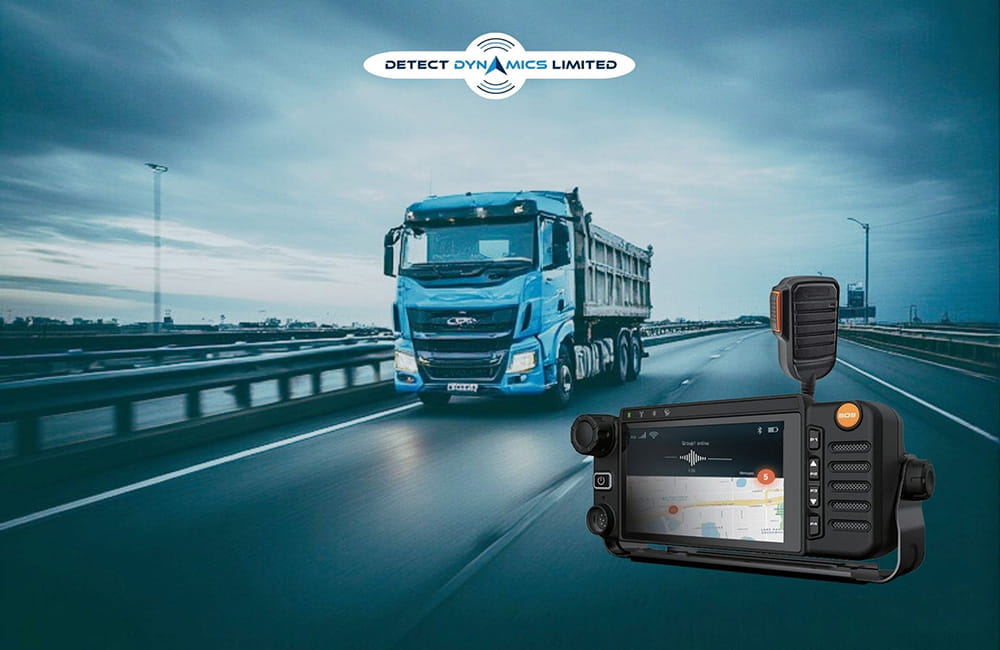
In the bustling trade corridors of East Africa – from the deep-water Port of Mombasa to the highland markets of Kigali – efficiency isn't just a goal; it's a lifeline. As the region solidifies its role as a global logistics hub in 2026, the adoption of push-to-talk (PTT) over cellular technology is proving to be a game-changer for fleet management and supply chain transparency. Unlike traditional radio systems that struggle with the vast, undulating terrain of the Rift Valley, mode PTT solutions leverage existing LTE networks to provide instantaneous, secure, and boundary-free communication. This shift is not merely about voice – it is about integrating data-rich workflows into a single, ruggedized device that can survive the dust of the Serengeti and the humidity of the Indian Ocean coast.
The East African Logistics Landscape: A Mode Frontier
East Africa is currently undergoing a radical transformation. With the African Continental Free Trade Area (AfCFTA) gaining momentum, the "Northe Corridor" and "Central Corridor" have become the arteries of the continent’s economy. The Northe Corridor, stretching from Kenya into Uganda, Rwanda, and the DRC, and the Central Corridor, originating from Tanzania’s Dar es Salaam, handle millions of tons of freight annually.
However, moving goods across these distances involves navigating significant "pain points." Traditional VHF/UHF radio systems often fail when a truck moves behind a mountain range or crosses a national border, leading to "dead zones" where a driver is essentially off the grid. Furthermore, the cost of maintaining proprietary radio infrastructure – repeaters, towers, and expensive frequency licenses – is becoming a burden for growing logistics firms.
Enter the next generation of push-to-talk technology. By utilizing Push-to-Talk over Cellular (PoC), logistics companies are bypassing these physical and financial barriers. This technology allows for 1:N (one-to-many) communication at the press of a button, ensuring that a dispatcher in Nairobi can talk to a fleet of fifty drivers spread across three different countries as if they were in the same room.
Overcoming Regional Challenges with Advanced Hardware
For a communication tool to be effective in East Africa, it cannot be a standard consumer smartphone. The environment is too harsh, and the operational demands are too specific. The latest industrial PTT devices are designed with a specific set of technical specifications tailored for the professional logistics sector.
1. Robust Processing and MultitaskingLogistics drivers in 2026 do more than just drive. They manage digital manifests, update delivery statuses, and use GPS navigation. To handle these tasks simultaneously without lag, the current standard for high-end PTT devices includes:
● RAM & ROM: 4GB + 64GB. This ensures that the push-to-talk application remains prioritized in the background while the driver uses data-heavy mapping tools or cargo-scanning software.
2. Universal Connectivity for Cross-Border TransitOne of the greatest headaches in East African logistics is the transition between network providers at One-Stop Border Posts (OSBPs). A device must support a massive array of cellular bands to ensure seamless roaming.
● GSM/WCDMA/LTE Bands: By supporting both FDD-LTE (B1/3/5/7/8/20/28A/28B) and TDD-LTE (B38/39/40/41), these devices can switch between providers in Kenya (Safaricom/Airtel), Tanzania (Vodacom), and Uganda (MTN) without dropping the signal.
● WiFi & Bluetooth: With WiFi 2.4G (IEEE 802.11 a/b/g/n) and Bluetooth 5.0 + BLE, these devices easily connect to warehouse networks or hands-free peripherals, keeping the driver focused on the road.
Precision Engineering for the FieldThe physical build of these PTT devices is where the solution truly meets the problem. In the logistics sector, downtime due to broken equipment is a hidden cost that can sink a company's margins.
The Visual Experience: Anti-Glare and High SensitivityTruck cabins in East Africa are often exposed to intense direct sunlight. A standard screen becomes a mirror under these conditions.
● Display: 5.0-inch HD IPS Anti-Glare Screen. This ensures that even in the high noon of the Ethiopian highlands, the screen remains readable.
● Touch Panel: LCD Bonded 5-points Capacitive. More importantly, it supports wet fingers and glove operation. Whether a dockworker is handling refrigerated cargo in the rain or a mechanic has greasy hands, the device remains fully functional.
Audio Clarity in Noisy EnvironmentsThe roar of a heavy-duty engine or the clamor of a busy port terminal makes standard voice calls nearly impossible.
● Input: Dual-Mic with a dedicated Independent Noise Cancellation chip. This filters out ambient engine noise, ensuring the dispatcher only hears the driver's voice.
● Output: 5-Watt Built-in Speaker. This is significantly louder than any standard smartphone, allowing for clear communication even in high-decibel environments.
Integration: The Power of Interfaces
Mode logistics is data-driven. The "Inteet of Things" (IoT) is no longer a buzzword; it is a requirement. The PTT device serves as a hub for various sensors and peripherals through an extensive array of interfaces:
Interface Type | Functionality for Logistics |
10Pin Aviation Interface | Secure, vibration-proof connection for in-vehicle mounting. |
RJ45 Interface | Direct Etheet connection for stable data transfer in warehouse hubs. |
Dual Micro-SIM | Redundancy for cross-border roaming to avoid high roaming fees. |
Type-C / USB-A | Versatile charging and connection to exteal scanners or cameras. |
Antenna Interfaces | Connection to exteal high-gain GPS/GLONASS antennas for tracking in remote areas. |
By implementing this technology, East African logistics providers are solving three core issues:
1. Real-Time Visibility: With integrated GPS and GLONASS (Global Navigation Satellite System), dispatchers no longer have to call a driver to ask for their location. The PTT device transmits precise coordinates back to the control center, allowing for accurate Estimated Time of Arrival (ETA) updates for customers.
2. Safety and Security: In the event of an emergency – be it a mechanical failure or a security threat – the dedicated PTT button allows for an instant distress signal. Unlike a phone call, which requires unlocking the screen and dialing a number, PTT is "eyes-free" and "hands-on."
3. Operational Cost Reduction: By moving from expensive, outdated radio systems to PoC, companies save on infrastructure. The devices utilize the same data plans already used for fleet tracking, consolidating multiple costs into one predictable monthly fee.
A Connected East African Corridor
As we look toward the remainder of 2026 and beyond, the integration of push-to-talk technology is set to deepen. We are seeing the rise of "Smart Corridors" where PTT devices interact with port management systems to automate gate-in and gate-out procedures. In Rwanda, "digital-first" logistics startups are using the 4GB RAM and 64GB ROM capacity of these devices to run AI-driven route optimization apps that adjust to traffic and road conditions in real-time.
The logistics sector is the backbone of East African growth. By equipping the men and women who drive this industry with tools that are as rugged as the landscape and as smart as the global market demands, the region is ensuring its place on the world stage. Connectivity is no longer a luxury - it is the fuel that keeps the trucks moving and the economy growing.
Sources
East African Community. (2024). The Northe Corridor Strategic Plan 2022-2026: Enhancing Regional Connectivity. EAC Secretariat.
GSMA. (2025). The Mobile Economy: Sub-Saharan Africa 2025. GSMA Intelligence.
Inteational Transport Forum. (2026). East Africa Freight Transport: Enhancing Regional Connectivity and Infrastructure. OECD Publishing.
Maersk. (2026). Logistics Trends 2026: The Digital Transformation of African Supply Chains. Maersk Insights.
World Bank. (2025). Connecting to Compete: Logistics Performance in East Africa. World Bank Group.