
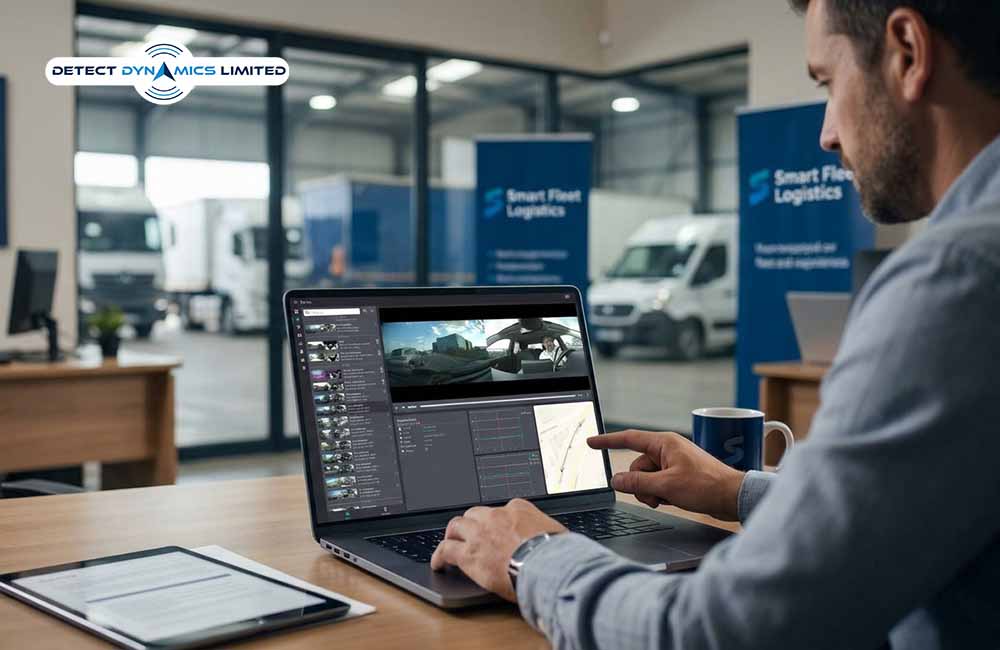
Imagine this: you’re sitting in your office in Nairobi, managing a fleet of trucks delivering goods across the Northe Corridor to Kampala and Kigali. Your business is the backbone of the regional economy, but every day, you face a knot in your stomach. You know the challenges: unpredictable road conditions, inconsistent driver training, and the constant anxiety of accidents and vehicle downtime. The risks are high, and traditional fleet management tools—basic GPS tracking and reactive reports—just aren't cutting it. You're not just managing assets; you're managing lives and the reputation of your entire operation.
What if you could be in the cab with every driver, every mile of the way? Not by hovering over them, but through a powerful, silent partner that coaches, protects, and empowers them. This isn't science fiction; it's the reality of AI Dash Camera technology, and it's rapidly transforming the logistics landscape in East Africa. This new generation of telematics is going far beyond simply recording an accident; it's proactively preventing them by addressing the root cause of most incidents: human behavior.
Let’s explore why this technology is a game-changer for East African fleets and how it provides a smarter way to manage risk.
The Unseen Risks: Why East Africa Needs Smarter Solutions
The transport sector in East Africa is vital, yet fraught with unique challenges. Long-haul routes are grueling, placing immense strain on drivers who often navigate challenging terrain and congestion. According to regional reports, a significant percentage of road accidents involve commercial vehicles, leading to tragic loss of life, massive financial setbacks through cargo loss and repairs, and skyrocketing insurance premiums (Controltech, 2025).
For fleet managers, the pain points are clear and constant:
1. Fatigue and Driver Drowsiness: The pressure to meet delivery schedules on tight routes like Mombasa-Nairobi often leads to long hours without adequate rest. Traditional methods cannot detect when a driver is on the brink of falling asleep.
2. Distracted Driving: In the age of smartphones, the temptation to check a message or take a call is ever-present, even at the wheel. A momentary glance at a screen can have catastrophic consequences on a busy highway.
3. Lack of Real-Time Coaching: When a driver develops a risky habit—like harsh braking or rapid acceleration—managers often only find out days later during a review. By then, it's too late to correct the behavior in the moment.
4. The "He-Said-She-Said" Problem: In the event of an accident, determining fault can be complex and costly. Without objective evidence, companies are often vulnerable to fraudulent claims or biased reporting.
Traditional telematics offer a rearview mirror perspective—telling you where and how fast a vehicle was going, but rarely why an incident occurred. This is where AI bridges the gap.
Enter the Pro7: Redefining In-Cab Intelligence
The latest wave of AI dash camera systems, such as the advanced Pro7, are designed with the specific intention of managing risk inside the vehicle, not just outside. This is crucial, as fleet risk is as much about the driver's state as it is about the road's state.
Here’s how technology like the Pro7 is solving the critical pain points for East African fleet operators:
1. Instant Identity: Facial Recognition
One of the biggest hurdles in large fleets, or operations that use driver rotation, is knowing who is driving which vehicle at any given time. This makes assigning accountability and specific training difficult. The Pro7 solves this with integrated facial recognition.
Upon starting the vehicle, the camera identifies the driver and assigns all subsequent recorded data to their unique profile. This creates an accurate, irrefutable log of driver activity, ensuring that coaching, scorecards, and rewards are always correctly attributed.
2. Seeing in the Dark: Infrared Monitoring
East African roads can be dark, and long-haul drivers often operate throughout the night. A standard camera becomes useless in low-light conditions, creating a critical blind spot in safety monitoring. The Pro7’s infrared sensor is a game-changer, supporting real-time monitoring and AI detection even in pitch-black cabins. This means the system never stops protecting the driver, regardless of the time of day or lighting.
3. Proactive Prevention: 14 AI Detections and a Dedicated NPU
This is the core of the "smarter" approach. The camera isn't just recording; it's analyzing. Using a dedicated Neural Processing Unit (NPU) for rapid on-edge processing, the Pro7 simultaneously runs up to 14 advanced AI detections.
It monitors the driver’s face, eyes, and head position for signs of fatigue (e.g., prolonged eyelid closure, yawning) and distraction (e.g., looking away from the road, using a mobile phone).
When the system detects a risky behavior, it doesn't wait to send a report to the manager. It provides immediate in-cabin voice alerts to the driver. A simple, polite audio cue like "Please focus on the road" or "Take a break, you look tired" can snap a driver back to attention and prevent an incident before it happens. This is real-time, autonomous coaching.
4. Objective Evidence and Streamlined Coaching
While the primary goal is prevention, incidents can still occur. In such cases, the AI dash camera acts as an unbiased witness. It captures high-definition video of the road and the cabin, providing concrete evidence to exonerate drivers in not-at-fault accidents and settle disputes quickly.
Furthermore, the data collected fuels a powerful coaching loop. Fleet managers can review flagged events with drivers using objective video evidence, tuing abstract safety policies into tangible, constructive conversations. This fosters a culture of safety and continuous improvement, rather than just surveillance.
The Road Ahead: A Culture of Safety and Efficiency
Adopting AI dash camera technology is not about spying on drivers; it's about providing them with the tools to retu home safely every night. It's a crucial step forward for the logistics industry in Kenya, Uganda, Tanzania, and beyond, moving from reactive fleet management to a proactive safety culture.
By addressing the root causes of accidents—fatigue and distraction—and providing a clear chain of accountability, companies can drastically reduce risk, lower operational costs, and protect their most valuable assets: their drivers and their cargo. The smarter way to manage fleet risk is here, and it's already on the road.
References
1. Abane, A. M. (2011). Travel characteristics and their implications for transport policy in Accra, Ghana. Joual of Transport Geography, 19(1), 125–135.
2. Controltech. (2025). The Real Cost of Fleet Accidents in East Africa. Retrieved from https://www.controltech-ea.com/fleet-safety-report
3. Inteational Road Transport Union (IRU). (2023). Driver Shortages and Safety in Developing Economies. Geneva: IRU Press.
4. Peden, M., et al. (Eds). (2004). World Report on Road Traffic Injury Prevention. World Health Organization.
5. World Bank. (2022). Road Safety in Sub-Saharan Africa: The Case of the Northe Corridor. Washington, DC: World Bank Publications.
