
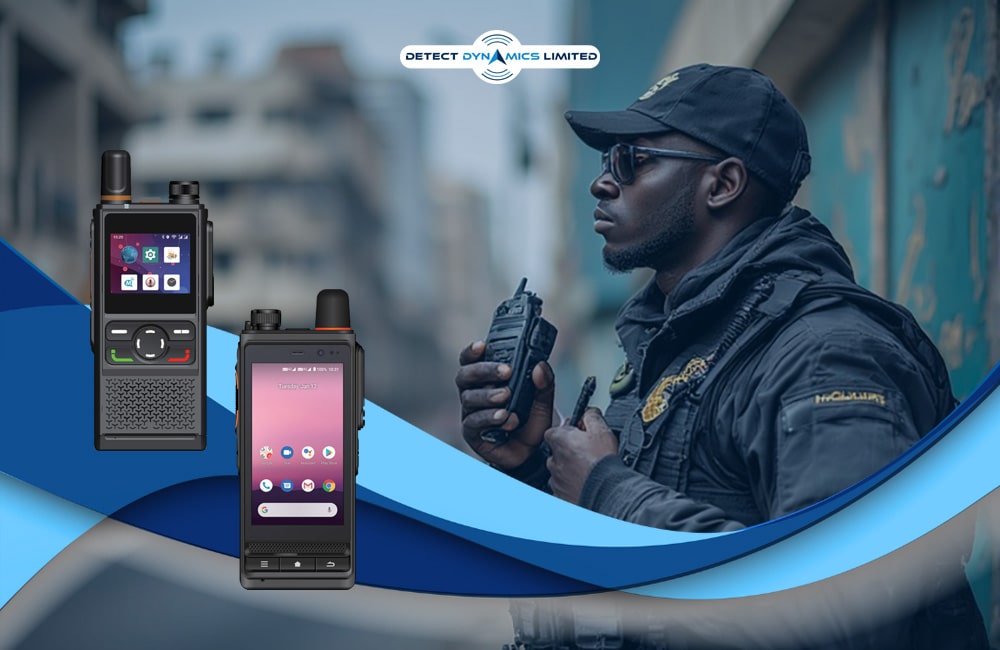
The nature of emergency response has fundamentally changed. Today’s incidents – whether large-scale natural disasters, complex traffic accidents, or high-density urban events – demand immediate access to high-fidelity information, including live video feeds, real-time telemetry, and advanced location services. These requirements expose the critical limitations of legacy communication systems, driving a necessary paradigm shift from specialized, narrowband voice systems toward converged, broadband data platforms.1
Mission-Critical Push-to-Talk (MCPTT) represents this crucial evolution. Defined by stringent 3GPP standards, MCPTT provides the reliability, availability, and security essential for first responders. It effectively merges the instantaneous communication capability of traditional PTT with the high-speed data delivery inherent in mode 4G and 5G networks.2
The accelerating adoption of MCPTT is driven by a powerful synergy that balances advanced technological capabilities with economic flexibility. While public safety has traditionally prioritized the proven resilience of Land Mobile Radio (LMR), the rising demand for sophisticated data applications, such as real-time situational awareness via video streaming 4, is undeniable. Crucially, Push-to-Talk over Cellular (PoC) infrastructure offers significantly lower Total Cost of Ownership (TCO) compared to the high capital expenditures associated with LMR infrastructure.5 This shift to a cellular-based model allows agencies operating on constrained budgets to access advanced, feature-rich communication tools that were previously economically prohibitive.6 This dual benefit of enhanced functionality and reduced infrastructure dependency is the core factor accelerating the transition to MCPTT.
The Foundational Technology Landscape: Comparing Legacy, Commercial, and Mission-Critical PTT
Understanding the value of MCPTT requires a rigorous comparison across the three tiers of public safety communication technology: Land Mobile Radio (LMR), commercial Push-to-Talk over Cellular (PoC), and the standards-based MCPTT.
1. Defining Legacy: Constraints of Land Mobile Radio (LMR)
For decades, LMR systems (such as P25 and TETRA) have reliably provided long-range, low-power voice communication.1 However, these systems operate in a fundamentally narrowband environment. Extending LMR coverage across large geographical areas requires significant Capital Expenditure (CapEx) for the construction of tall towers and repeaters, leading to high operational inflexibility.5
The primary technological hurdle for LMR lies in data handling. LMR systems are inherently insufficient for transmitting the bandwidth-hungry and latency-sensitive applications critical for mode decision-making, such as real-time video, advanced location services, and integrated collaboration tools.1 Furthermore, even advanced digital LMR systems can struggle with seamless interoperability across different vendors or even departments, leading to fragmented communication environments that pose serious threats during multi-agency emergency responses.1
2. The Evolution to Push-to-Talk over Cellular (PoC)
PoC leverages commercial cellular networks (4G, 5G, and Wi-Fi) to enable instant group communication over vast geographical areas.5 This approach dramatically alters the economic model. PoC eliminates the need for expensive owned infrastructure, shifting the investment burden away from CapEx toward scalable OpEx subscription models.5 This economic flexibility makes sophisticated communication instantly accessible to a wider network of community partners – such as utility workers or school staff – who need to connect with first responders but cannot justify the cost of dedicated radio systems.6 This broad commercial appeal and rapid expansion are evident in the market forecasts, which predict that the cellular/PoC segment will experience the fastest Compound Annual Growth Rate (CAGR) within the push-to-talk market.8
3. The 3GPP Standard: Mission-Critical PTT (MCPTT)
MCPTT is not simply PoC – it is the essential evolution, built upon stringent 3GPP standards to satisfy the performance and security requirements of true critical operations.2
The fundamental difference lies in network access assurance. Unlike standard commercial PoC, which must contend with all other cell users, MCPTT grants first responders the highest priority line of connectivity over LTE networks. This feature, known as priority and preemption, ruthlessly ensures that critical calls will always go through, even when the network is congested, such as during major public events like festivals.2 This standardized priority transforms communication from a best-effort cellular service into the guaranteed service level agreement required for life-saving missions.
MCPTT systems are inherently standards-based, adhering to 3GPP protocols to guarantee the availability, reliability, and security necessary when "life or values important to society are at risk".9 While LMR currently still holds the largest market share (generating over 59% in 2024 8), representing massive legacy investment 7, the immediate operational strategy for public safety must involve supplementation and integration. Since LMR offers the necessary device-to-device (D2D) capability that is not yet fully mature in cellular networks, MCPTT solutions must offer seamless integration with existing P25/TETRA/LMR systems via Radio over IP (RoIP) gateways.11 This hybrid approach allows agencies to leverage the best of both worlds and migrate at a pace suitable for their infrastructure lifecycle.
The long-term goal for MCPTT involves full LMR replacement, which is anticipated upon the commercial availability of 5G NR sidelink technology. This technology will enable 3GPP devices to communicate directly without reliance on network infrastructure – a critical capability for first responders operating in coverage-limited environments like deep basements, tunnels, or disaster zones.13
Table 2.3 provides a data-driven comparison to highlight these critical differences.
Table 2.3. LMR vs. Mission-Critical PTT (MCPTT) Comparative Analysis
Feature Metric | Legacy LMR System (TETRA/P25) | Mission-Critical PTT (MCPTT) via LTE/5G | Source Data |
Network Type | Narrowband/Private Radio Network | Broadband LTE/5G/Commercial Cellular | 1 |
Data & Multimedia | Voice-Only or Limited (Low Bandwidth) | High-Speed Video, Images, Real-Time Data (MCData/MCVideo) | 1 |
Coverage Area | Limited by owned repeater infrastructure (High CapEx) | Wide Area/National/Inteational (Leverages Carrier Networks) | 5 |
Network Priority | High (Dedicated Spectrum) | Highest Priority and Preemption (3GPP Standards) | 2 |
Infrastructure Cost | High CapEx (Towers, Repeaters, Licensing) | Low/No CapEx (OpEx Subscription Model) | 5 |
Future Direct Mode (D2D) | Available (Traditional LMR) | Pending 5G NR Sidelink implementation | 13 |
The Mission-Critical Imperative: Transforming Operational Communication Dynamics
The technical features of MCPTT are directly correlated with measurable improvements in efficiency, especially in the areas of response coordination, administrative ease, and cross-agency collaboration.
1. Instantaneous Group Communication and Guaranteed Assurance
The fundamental PTT mechanism allows users to communicate instantly with individuals or entire talkgroups with the simple press of a button.9 MCPTT refines this immediacy by introducing mechanisms that guarantee message delivery and acknowledgement.
For large-scale deployments, such as during critical incidents, the ability to send mass communications via SMS and MMS is vital for quick, coordinated resource allocation.9 Mode PTT applications (such as ESChat) incorporate "read receipts," providing command centers with instant confirmation that a critical message has been received, opened, and acknowledged by the end user.12 This crucial assurance mechanism drastically reduces communication uncertainty and is critical for establishing command certainty during high-stress operations. Furthermore, first responders are equipped with hard or soft SOS buttons, instantly initiating an emergency call with the highest network priority to route assistance to the appropriate resource without delay.14
2. Centralized Command and Control
Mode PTT solutions offer sophisticated administrative management capabilities that transcend the limitations of traditional localized radio management. Instead of relying on physical device configuration and local infrastructure maintenance, MCPTT platforms utilize cloud-based carrier systems.
Administrators gain the capability to manage PTT services, including the creation of dynamic talk groups, contact assignments, and priority level settings, remotely. These configurations can be pushed seamlessly to devices without the need for physical access or complex programming.6 This shift from hardware management to software-defined network management significantly improves the speed of deployment and overall administrative efficiency. During complex, multi-faceted incidents, dispatchers also have the flexibility to simultaneously monitor voice activity and control audio assignments across multiple groups, ensuring comprehensive situational oversight.14
3. Achieving Seamless Interoperability and Cross-Agency Collaboration
Interoperability remains one of public safety's greatest challenges, particularly when incompatible legacy systems fragment the communication environment.7 MCPTT facilitates true interoperability by enabling a hybrid migration strategy. Agencies can utilize Radio over IP (RoIP) gateways to seamlessly integrate new broadband PTT solutions with existing LMR, P25, and TETRA systems, allowing for a gradual, low-risk transition.11
Beyond inteal departmental coordination, the cellular foundation of MCPTT enables critical interdepartmental and cross-agency collaboration. PTT apps allow direct, secure communication between first responders and vital community partners, such as utility workers managing outages or school staff addressing campus incidents. This connectivity is established without requiring these partners to acquire or lease expensive, dedicated radio systems, fostering unified response capabilities across the community ecosystem.6
Measurable Operational Impact: Data, Situational Awareness, and Efficiency Gains
The shift to MCPTT is justified by tangible improvements in operational effectiveness, driven primarily by integrated, high-speed data capabilities and enhanced situational awareness.
1. Enhancing Situational Awareness with Real-Time Data Integration
The integration of data (MCData and MCVideo) is the single most important technical advantage of MCPTT over LMR. First responders are able to instantly push multimedia – including photos, videos, and file attachments – to individuals or entire talk groups. This multimedia messaging capability drastically increases the clarity and speed of information exchange, reducing ambiguity and enabling faster response times. For example, an officer can instantly receive security camera footage showing a suspect's direction of flight, greatly aiding identification and pursuit.10
This data integration is augmented by real-time location tracking and mapping features. Command centers can track team locations, share precise coordinates, and find addresses, optimizing large-scale deployments and improving resource allocation for personnel safety.12
The Role of the Inteet of Life-Saving Things (IoLST)
The PTT device is becoming the central processing unit for a holistic public safety ecosystem known as the Inteet of Life-Saving Things (IoLST).4 IoLST extends mission-critical communications by linking first responders to specialized wearable technology. This includes:
● Responder Safety Monitoring: Smart-bands monitor a first responder’s vital signs (heart rate, blood pressure, glucose) and exposure to toxic substances while operating in dangerous environments.4
● Remote Assistance: Emergency Medical Services (EMS) personnel can use smart glasses to stream real-time video feeds to remote experts or professional doctors, receiving crucial live instruction and guidance.4
● Hands-Free Operation: Devices like watch-type wearables provide immediate alerts and location sharing capabilities, critical for personnel wearing protective gloves or engaged in manual rescue tasks.4 These wearables often utilize specialized low-power cellular connectivity solutions like LTE-M and Narrowband-IoT (NB-IoT) to ensure sustained battery life while providing reliable connectivity.4 This move from simple "Lone Worker Support" to continuous, sophisticated data analysis positions the MCPTT system as a critical component of institutional duty of care.
2. Quantifying Efficiency and Response Time Reductions
The operational benefit of automated data sharing and digital interoperability translates directly into reduced incident clearance times. Evidence shows that integrated communication, specifically the integration of Computer-Aided Dispatch (CAD) systems with Traffic Management Center (TMC) systems, resulted in a 34% reduction in incident clearance time in Maryland and a 38% reduction in Oregon.17 These significant time savings are attributed to the reduction in coordination time and responder distraction, validating that real-time digital communication is the primary driver of mode operational efficiency.
For high-stakes environments, communication reliability is paramount. The National Institute of Standards and Technology (NIST) emphasizes key performance indicators (KPIs) for Mission-Critical Voice, focusing on Mouth-to-Ear (M2E) Latency – the time delay between speech input and reception – as a measure of effectiveness.18 Furthermore, the benefits of mode PTT have been validated in clinical settings – a study assessing the use of a PTT application in an academic emergency department during the COVID-19 pandemic found that the tool improved staff communication, yielding favorable responses regarding communication (63.0% to 81.5%) and clinical performance (55.5% to 72.3%).20
Table 4.1. IoLST Device Integration and Situational Awareness
Leave a Comment |