
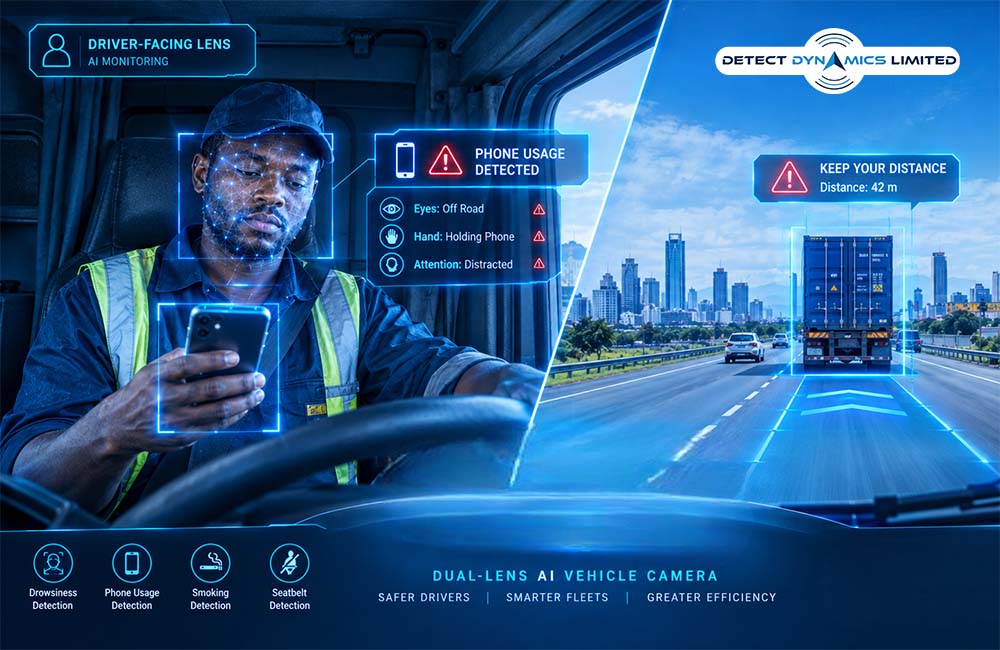
Here's a question worth sitting with for a second: how much do you actually know about how your vehicles are being driven right now?
Not where they are. Not what time they left the yard. How they're being driven — the braking, the speeding, the sharp coering on a wet road outside Kampala or a congested junction in Nairobi.
For most fleet operators across East Africa, the honest answer is: not much. And that gap — between "the truck is out there somewhere" and "I know exactly how that truck is performing" — is where a driver behavior monitoring system eas its keep. It's the layer of insight that sits above basic GPS tracking, tuing a blinking dot on a map into a story about risk, cost, and opportunity.
Let's talk about why that story matters so much right now, especially here.
The Pain Points Are Real — and They're Getting Worse
Between 2010 and 2021, road traffic deaths in the African region rose by 17%, even as global rates fell by 5% over the same period. That's not a small statistical blip. Africa is now the only region in the world where road deaths are climbing, with more than 225,000 people dying on the continent's roads each year — nearly a fifth of the global total.
The regional fatality rate now sits at roughly 26.6 deaths per 100,000 people, well above the world average of 17.5, and far above rates seen in Europe or South-East Asia. Behind every one of those numbers is a fleet, a driver, a family, and — for the business owner — a claim, a delay, a reputational hit.
Layer onto that the operational reality East African fleet managers deal with daily: unpredictable road conditions, congested urban corridors, long-haul cross-border routes, inconsistent enforcement of traffic regulations, and rising fuel and insurance costs. Fuel alone represents one of the largest single operating expenses for transport companies in the region, and aggressive driving habits — hard acceleration, harsh braking, excessive idling — quietly inflate that bill every single week, whether anyone's watching or not.
Add rising insurance premiums, unresolved liability disputes after accidents, and mounting pressure to prove regulatory compliance, and you've got a business problem that "just driving" simply can't solve anymore.
So what does?
Visibility: You Can't Manage What You Can't See
Every meaningful improvement starts with data you can trust. A driver behavior monitoring system gives fleet operators a continuous, minute-by-minute picture of how each vehicle — and each driver — is actually performing on the road.
That means real numbers on harsh braking events, speeding incidents, coering, and idling time, mapped against cost, service quality, safety outcomes, and regulatory compliance. In East Africa specifically, where road conditions and traffic pattes vary enormously from one route to the next, understanding how drivers actually operate vehicles is what allows fleet managers to get ahead of accidents rather than clean up after them.
Visibility isn't about hovering over your drivers. It's about finally having a clear line of sight into the parts of your operation that used to be a black box.
Evidence: When It's Your Word Against Theirs
Here's a scenario every fleet manager in the region has lived through: a collision happens, both sides claim the other was at fault, and without evidence, it becomes a costly guessing game — one that often ends in inflated settlements, drawn-out disputes, or an unfair blow to a driver who did nothing wrong.
This is where reliable, timestamped data — backed by video — changes the entire conversation. Instead of conflicting accounts, you have proof. Instead of assumptions, you have a documented sequence of events. That evidence doesn't just settle disputes faster; over time, it also strengthens your position with insurers and helps protect good drivers from false accusations they'd otherwise have no way to contest.
Cutting Costs: Where the Real Savings Hide
Aggressive acceleration, speeding, and excessive idling can add somewhere between 8% and 15% to a fleet's fuel bill — and on a fleet of any real size, that's not a rounding error. That's a recurring monthly leak.
Driver behavior data lets you find that leak and close it. Coaching against harsh driving events tends to bring incident rates down quickly, often within the first few months, well before any formal policy overhaul. Fewer incidents mean fewer fines, less unplanned downtime, lower maintenance costs from reduced wear and tear, and — over time — better standing with insurers. Cutting costs, in other words, isn't a separate initiative from improving safety. It's the same initiative, viewed from a different angle.
Compliance: Tuing Regulation Into a Data Problem You Can Actually Solve
Whether the pressure is coming from local traffic authorities, cross-border transport regulations, or industry-specific standards, compliance has traditionally been a paperwork headache. Driver behavior monitoring tus it into something far more manageable: a data problem.
With continuous records of speed, braking behavior, and route adherence, fleet operators can demonstrate compliance rather than simply asserting it — and make faster, better-informed decisions about where policy, training, or vehicle maintenance needs attention. When regulations shift, as they inevitably do, having that data infrastructure already in place means adapting is a configuration change, not a scramble.
Driver Safety Promotion: Rewriting the Narrative
Now, here's where a lot of fleet technology gets it wrong — and where it's worth pausing.
Too often, driver monitoring gets framed purely as surveillance: a way to catch people doing something wrong. That framing doesn't just miss the point — it actively works against you. Drivers who feel watched and punished disengage. Drivers who feel supported and recognized improve.
The better approach — and the one gaining traction across East African fleets — treats this technology as a tool that helps drivers stay safe and get recognized for doing their job well, not one built to catch them out. Programs that reward responsible driving behavior, identified through GPS and behavior data, have already shown real results in East Africa — including initiatives that combine police, telematics providers, and driver cooperatives to recognize safe driving and reinforce compliance with traffic rules through positive reinforcement rather than evasion.
That shift — from punishment to recognition — tends to be the difference between a monitoring system drivers resent and one they actually buy into.
Bringing It All Together
None of this is really about the technology itself. It's about what the technology makes possible: fewer preventable accidents on roads that badly need fewer of them, lower costs for operators working with thin margins, fairer outcomes when disputes arise, and a safer, more supported experience for the drivers actually behind the wheel every day.
Africa currently holds barely 3% of the world's vehicle fleet, yet carries a disproportionate share of global road deaths — a gap that data-driven driver behavior monitoring is uniquely positioned to help close, one fleet at a time.
The question isn't really whether this kind of visibility is worth having. It's how much longer any fleet operator can afford to go without it.
References
AVLView. (2026, August 7). Driver behaviour monitoring: Complete fleet guide 2026. https://avlview.com/blog/driver-behaviour-monitoring-guide
Control Tech East Africa. (2026, January 16). Driver behavior analytics East Africa: Enhance fleet safety. https://www.controltech-ea.com/driver-behavior-analytics/
Dikus. (2025, October 20). GPS & telematics for trucking in East Africa. https://dikustransporters.co.ke/gps-telematics-trucking-east-africa.html
FIA Foundation. (2023, December 13). African road action needed: FIA Foundation response to World Health Organisation road safety report. https://www.fiafoundation.org/news/who-road-safety-analysis-shows-slight-reduction-in-global-deaths-but-big-increase-in-africa
World Health Organization, Regional Office for Africa. (2023, December). Road traffic deaths rise in the African region, but down globally, WHO report. https://afro.who.int/news/road-traffic-deaths-rise-african-region-down-globally-who-report