
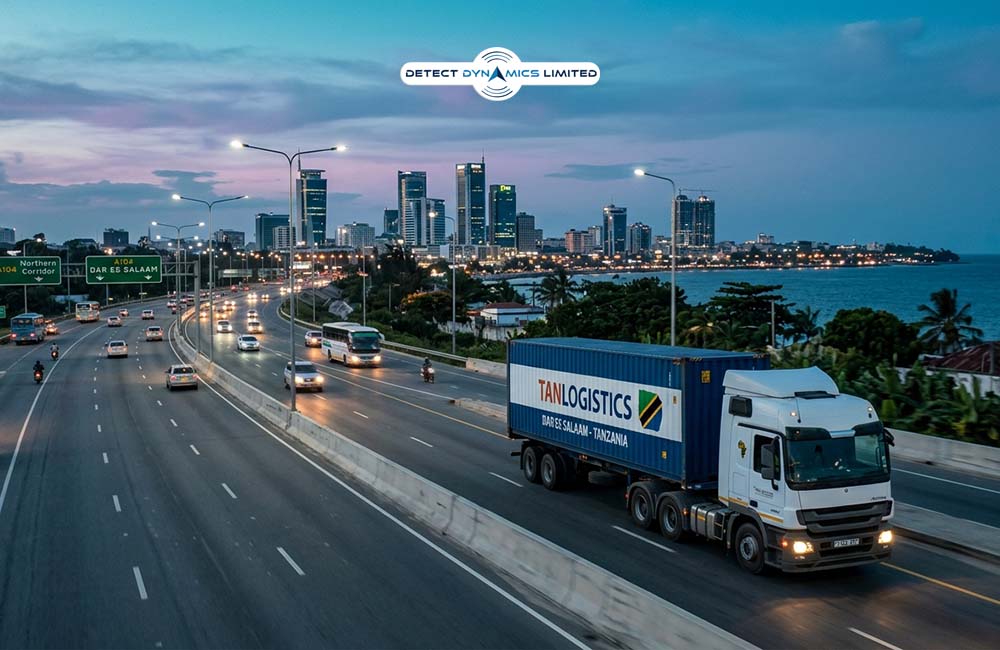
If you manage a fleet along the bustling Northe Corridor connecting Mombasa through Nairobi to Kampala, or along the Central Corridor out of Dar es Salaam, you already know the unvaished reality: running a transport business in East Africa is a tough, high-stakes game. Between unpredictable road infrastructure, dense mixed traffic featuring everything from heavy trucks to informal boda-bodas, unpredictable weather, and rampant liability fraud, every kilometer driven carries operational risk. In an industry where razor-thin margins can be wiped out by a single unjust lawsuit or catastrophic highway collision, relying on traditional reactive measures is no longer enough. Enter the AI Dash Camera—a technological shift from passive observation to proactive protection that is quietly revolutionizing commercial transport across Kenya, Uganda, Tanzania, and Rwanda.
Too many fleet operators view safety tech through the narrow lens of line-item expense. But when you examine the compounded cost of vehicle downtime, inflated insurance premiums, fraudulent third-party claims, and lost cargo, the perspective flips completely. Protecting your business requires an intelligent system capable of seeing, analyzing, and intervening in real time.
The Hidden Costs of Navigating East African Logistics
Running commercial vehicles across East Africa means facing a unique set of daily operational landmines. According to regional transport statistics, Sub-Saharan Africa suffers from disproportionately high road fatality rates, with over 75% of commercial vehicle incidents linked directly to human behavior—primarily driver fatigue, speed over-extension, and mobile phone distraction. Long-haul corridors demand hours of intense concentration from drivers navigating poorly lit stretches, unexpected potholes, and chaotic urban bottlenecks.
The financial burden, however, goes far deeper than physical repair bills:
What Makes an AI Dash Camera System Different?
Unlike basic consumer dashcams that simply save low-resolution video loops onto a micro-SD card—or legacy GPS units that merely tell you where a vehicle is sitting—an enterprise-grade AI Dash Camera is a sophisticated video telematics engine.
Equipped with dual HD lenses (one facing outward toward the road, the other facing inward toward the cab) and integrated computer vision microprocessors, the system processes visual streams directly inside the vehicle in real time. The outward-facing camera continuously tracks lane positioning, vehicle follow distances, and potential forward collisions. Simultaneously, the inward-facing camera monitors precise driver facial landmarks, eye-blink frequency, gaze direction, and posture.
Rather than generating endless hours of unmonitored footage that no manager has time to review, the artificial intelligence isolates key micro-events. The moment the onboard edge computer detects microsleep pattes, gaze diversion (such as texting while driving), seatbelt non-compliance, or dangerous tailgating, it takes immediate action.
Protect Drivers: Empowering Your Greatest Asset
There is a common misconception among transport teams that installing in-cab cameras is an exercise in "Big Brother" surveillance. Successful fleet leaders know that changing this narrative comes down to positioning: Your drivers are your greatest asset—shield them from fraud and false blame.
Commercial drivers in East Africa operate under demanding conditions, often facing high stress on isolated highways. When an accident occurs, an innocent driver is frequently made the scapegoat by aggressive third parties or biased observers. An AI Dash Camera serves as an unbiased, indisputable witness mounted right on the windshield.
Consider these real-world driver protections:
Protect Profits: Tuing Safety into a Direct Investment
It is easy to view fleet management technology purely as an administrative cost center. But safety isn’t an expense; it’s an investment that pays direct dividends to your balance sheet. Every accident prevented, insurance claim expedited, and fraudulent payout blocked directly strengthens your bottom line.
1. Expedited Insurance Claims and Lower Premiums
Settling commercial insurance claims in East Africa traditionally takes months of back-and-forth negotiations, frozen assets, and legal fees. With cloud-connected AI Dash Cameras, high-definition video of critical incidents is automatically uploaded to the cloud within seconds of impact. Insurers are presented with definitive visual proof, slashing claim settlement times from months down to days and eliminating costly legal disputes. Over time, demonstrated reductions in loss ratios allow fleet owners to negotiate significantly lower policy premiums.
2. Deterring Theft and Cargo Tampering
High-value cargo moving across regional borders remains vulnerable to opportunistic pilferage and unauthorized stops. Multi-camera AI configurations—extending coverage to side-mirrors and rear trailer doors—ensure that any unauthorized access or cargo tampering triggers instant alerts to your central operations desk, complete with live video feeds via 4G roaming networks.
3. Substantial Fuel and Maintenance Savings
Smooth driving is efficient driving. By actively reducing aggressive habits like rapid acceleration, excessive speeding, hard coering, and prolonged idling, AI video telematics routinely yield a 5% to 12% reduction in fleet fuel consumption. Furthermore, smoother driving directly extends the life of brake pads, tires, and suspension systems—critical savings given the costly price of vehicle spare parts across the region.
Strategic Roadmap for East African Fleet Owners
Adopting intelligent video telematics requires a deliberate rollout strategy to ensure smooth integration, driver buy-in, and maximum retu on investment.
SYSTEM IMPLEMENTATION ROADMAP
STEP 1: Fleet Risk Audit & Hardware Selection
Evaluate corridor risks, select ruggedized 4G devices.
STEP 2: Transparent Driver Communication & Workshops
Reframe cameras as protective tools against fraud.
STEP 3: Phased Pilot Program & Cloud Calibration
Deploy on high-risk routes; tune alert sensitivity.
STEP 4: Full Deployment & Value-Based Incentives
Link driver safety scores directly to monthly bonuses.
When evaluating hardware and software partners for the East African market, verify that the technology provides:
The Verdict: Moving from Defense to Leadership
In the fast-evolving East African transport sector, standing still means falling behind. Relying on luck or outdated tracking tools while sending valuable assets out on challenging highways is a strategy of the past.
An AI Dash Camera system transforms your fleet management approach from reactive firefighting to proactive control. By shielding your drivers from false blame, preventing fatigue-induced collisions, reducing fuel overhead, and eliminating fraudulent liability, this technology delivers a clear, rapid retu on investment.
Protect your drivers, defend your business, and secure your financial future—because in mode logistics, true safety isn’t an expense; it’s your most profitable advantage.
Sources